
ISSUES in SOCIAL AND ENVIROMENTAL
ACCOUNTING (ISEA)
About ICSEARD
To house ideas to research international companies from the dimension of social and environmental performance and publish research activities on social and environmental accounting, a new institution named the International Center for Social and Environmental Accounting Research and Development (ICSEARD) has been set up since 2006 in the Faculty of Economics of Sebelas Maret University, Indonesia. One of the centre’s important objectives is to disseminate research and development in social and environmental accounting. There are some important activities in the centre: Research, Rating activities, Training, and Publication.
Research:
The International Center for Social and Environmental Accounting Research and Development conducts research activities on topics such as Corporate Social Responsibility, corporate governance, and social and environmental accounting from a financial and management accounting perspective.
Rating:
The International Center for Social and Environmental Accounting Research and Development (ICSEARD) also conducts assessments to evaluate the performance of Indonesian companies from a social and environmental perspective.
Training:
The International Center for Social and Environmental Accounting Research and Development (ICSEARD) provides training services to companies and the public sector. These training activities
include how to implement Corporate Social Responsibility and its impact on financial performance. Therefore, the new journal, which explores the practice and theory of social and environmental accounting from both financial and management accounting perspectives, should involve international scholars (from all over the world) with similar concerns.
Publication:
One of the centre's activities is publishing an international journal named Issues in Social and Environmental Accounting (ISEA). Social and environmental issues in general, and accounting in specific, are not only local problems; they have affected countries all over the world (global commons). Therefore, the new journal, which explores the practice and theory of social and environmental accounting from both financial and management accounting perspectives, should involve international scholars (from all over the world) with the same concerns. The International Center for Social and Environmental Accounting Research and Development also publishes working papers on Social and Environmental Accounting and other topics on the website.
ABOUT ISSUES IN SOCIAL AND ENVIRONMENTAL ACCOUNTING (ISEA)

Vision and Aim of the Journal
The journal publishes empirical, theoretical, and review papers as well as book reviews. In the journal, prospective authors can raise issues of social and environmental accounting from various perspectives within the accounting field and other fields that directly impact it. ISEA serves as a networking and dissemination platform for the practices and theories of social and environmental accounting for professionals in the field. Issues in Social and Environmental Accounting (Issues in SEA or ISEA) is an international and refereed journal published quarterly (starting 2013) in hardcopy by the International Center for Social and Environmental Accounting Research and Development (ICSEARD). ISEA serves as a networking and dissemination platform for the practices and theories of social and environmental accounting by people concerned with that field. In the journal, prospective authors can raise issues of social and environmental accounting from various perspectives within the accounting field and other fields that directly impact it. The journal publishes empirical, theoretical, and review papers, as well as book reviews.
Subject Coverage
Topics include but are not limited to :
1. Environmental accounting
2. Social accounting
3. Ethical issues in accounting and financial reporting
4. Corporate governance and accountability
5. Accounting for the Costs and Benefits of CSR-related Activities
6. Accounting and Disclosure of Environmental Liabilities
7. Corporate Environmental Strategy
8. Corporate Social Performance
9. Corporate social responsibility and management control
10. Corporate social responsiveness
11. Triple bottom line performance
12. Sustainability issues
13. Transparency issues
14. Accountability isues
Indexing and abstracting
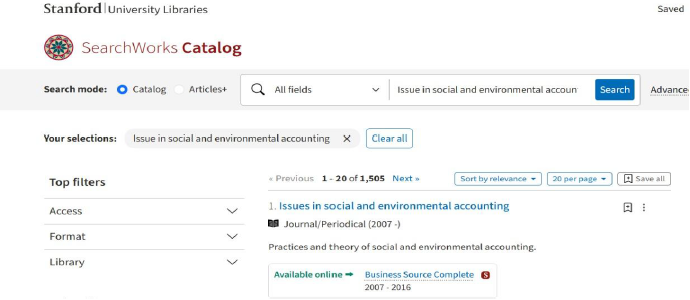
Issues in Social and Environmental Accounting is Indexed by :
- ERA/Australian Business Dean Council (ABDC)
- Google Scholar
- Cabell's Directory of Publishing Opportunities
- EBSCO
- Copernicus
- NSD Norway: Scientific journals, series, and publishers
- Crossref
- DOAJ


Editorial Team
Editor in Chief
1. Professor. Hasan Fauzi, Ph.D., CSRS., CSRA. Universiti Tenologi MARA (UiTM)
Associate Editors
1. Professor. Kabiru Isa Dandago, Ph.D., Bayero University, Nigeria
2. Professor. Mostaq M. Hussain, Ph.D., University of New Burswick, Canada
3. Associate Professor Dr. Halil Paino, Universiti Tenologi MARA (UiTM)
4. Dr. Muhammad Nazmul, Universiti Tenologi MARA (UiTM)
Editorial Advisory Board
- Professor David Crowther, Ph.D. Professor at President Social Responsibility Research Network, United Kingdom
- Professor M. Azizul Islam, Ph.D University of Aberdeen Business School
- Professor Shamima Haque, PhD, University of Dundee
- Professor Aly Salama, Ph.D., Northumbria University, Newcastle
- Professor Judy Brown, Ph.D., Victoria University of Wellington, New Zealand
- Professor Katsuhiko Kokubu, Ph.D. , Kobe University, Japan
- Professor Pamela Kent, Ph.D. Bond University, Australia
- Professor Stewart Lawrence, Ph.D., University of Waikato, New Zealand
- Professor Carol Tilt, Ph.D., University of South Australia, Australia
- Professor Abdul A. Rasheed, Ph.D. , University of Texas at Arlington, United States
- Professor Garry O’Donovan, Ph.D. , University of Tasmania, Australia
- Professor Stefan Schaltegger, Ph.D., University of Lüneburg, Germany
- Professor Tjiptohadi Sawarjuwono, Ph.D., University of Airlangga, Indonesia
- Professor Swagata Sen, Ph.D. , University of Calcutta, India
- Professor Pamela Stapleton, Ph.D. , University of Manchester, United Kingdom
- Professor Goran Svensson, Ph.D. , Oslo School of Management, Norway
- Professor Lois Mahoney, Ph.D. , Eastern Michigan University, United States
- Professor Lee Parker, Ph.D. , RMIT University, Australia
- Professor GÜlar Aras, Ph.D. , Yıldız Technical University, Turkey
- Professor Martin Freedman, Ph.D. , Towson University, United States
- Professor Den Paten, Ph.D., Illinois State University, United States
- Professor Carlos Larrinaga-González, Burgos University of Burgos, Spain
- Professor Eko Ganis, Ph.D. , University of Brawijaya , Indonesia
- Professor Masudul Alam Choudhury, Ph.D. , Sultan Qaboos University, Oman
- Professor Azlan Amran, Ph.D. , University Sain Malaysia, Malaysia
- Professor Unti Ludigdo, Ph.D., CA., University of Brawijaya , Indonesia
- Professor Corina Joseph, Ph.D. , Universiti Teknologi MARA (UiTM) Sarawak, Malaysia
- Professor Haslinda Yusoff, Ph.D., Universiti Teknologi MARA (UiTM) Shah Alam, Malaysia
- Professor Kıymet Çalıyurt, Ph.D. , Trakya University, Turkey
- Professor Rémi Jardat, Ph.D. , Université Evry, France
- Professor Jennifer C. Chen, Ph.D. , Brigham Young University, Hawai, United States
- Professor Alan Murray, Ph.D. , Sheffield University, United Kingdom
- Professor Bryan Husted, Ph.D. , ITESM/Instituto de Empresa , Mexico
- Professor Ralph Paliam, Ph.D., American University of Kuwait, Safat, Kuwait
- Professor Sheikh Mohammed Rafiul Huque, Ph.D. , Jahangirnagar University, Bangladesh
- Professor Marc Orlitzky, University of South Australia, Australia
- Professor. Hussain A. Al-Khadash, Ph.D. , Hashemite University, Jordan
- Professor. Vanessa Magness, Ph.D. , Toronto Metropolitan University, Toronto, Canada
- Professor. Petia Koleva, Ph.D. , University of Nantes, France
- Professor Selvam D., Ph.D. , VIT University, India
- Professor Ataur Belal, Ph.D. , Ashton University, United Kingdom
- Professor Caroline Dale Ditlev-Simonsen, Ph.D. , BI Norwegian Business School, Norway
- Professor. Roshima Said, Ph.D. , UiTM Kedah, Malaysia, Queensland
- Professor Evangeline Elijido-Ten, Ph.D. , Swinburne University of Technology, Australia
- Professor Sylvia Veronica Nalurita Purnama Siregar, Ph.D.,CA . , University of Indonesia, Indonesia
- Professor Juniati Gunawan, PhD., CSRS , Tri Sakti University, Indonesia
- Professor Murniati Mukhlisin, Ph.D, University of Tazkia
- Professor Matias Laine, Ph.D. , University of Tampere, Finland
- Professor Sheikh Mohammed Rafiul Huque, PhD, Institute of Business Administration, Jahangirnagar University, Bangladesh
- Assoc Prof. Mahmood A. Momin, Ph.D., Auckland University of Technology, New Zealand
- Assoc Prof. Mehran Nejati, Ph.D., Edith Cowan University (ECU), Australia
- Dewi Fitriasari, Ph.D., Bina Nusantara International University, Indonesia
- Dr. Nadhirah Nagu, University of Hasanuddin, Makassar, Indonesia
- Dr. Elvia Ivada, University of Sebelas Maretm Solo, IndonesiMha
- Dr. Md. Abu Jahid, Universitas Muhammadiyah Yogyakarta, Indonesia
Editorial Policies
• Focus and Scope
• Section Policies
• Peer Review Process
• Publication Frequency
• Open Access Policy
• ISEA's Publication Ethics and Malpractice Statement
• Article Processing Charge
• Article Licences
Focus and Scope
ISSUES In SOCIAL AND ENVIRONMENTAL ACCOUNTING (Issues in SEA or ISEA) is a networking and dissemination platform for the practices and theory of social and environmental accounting by people concerned with this field. In the journal, prospective authors can raise issues of social and environmental accounting from various perspectives within the accounting field and other fields that directly and indirectly impact it. The journal publishes empirical, theoretical, and review papers, as well as book reviews. ISSUES IN SOCIAL AND ENVIRONMENTAL ACCOUNTING (Issues in SEA or ISEA) is a networking and dissemination platform for the practices and theory of social and environmental accounting by people concerned with the field. In the journal, prospective authors can raise issues of social and environmental accounting from various perspectives within the accounting field and other fields that directly and indirectly impact it. The journal publishes empirical, theoretical, and review papers, as well as book reviews.
Topics include but are not limited to:
• Environmental accounting
• Social accounting
• Ethical issues in accounting and financial reporting
• Corporate governance and accountability
• Accounting for the Costs and Benefits of CSR-related Activities
• Accounting and Disclosure of Environmental Liabilities
• Corporate Environmental Strategy
• Corporate Social Performance
• Corporate social responsibility and management control
• Corporate social responsiveness
• Triple bottom line performance
• Sustainability issues
• Transparency issues
• Accountability isues
Section Policies
Articles
| ✅Open Submissions | ✅Indexed | ✅Peer Reviewed |
| (still in New Web migration proses) |
Peer Review Process
Based on the reviewers' recommendations, the Editor-in-Chief (EIC) will make decisions regarding the papers. From the peer-reviewing process, the papers could be categorised as accepted for publication, accepted with minor revisions, accepted with major revisions, or rejected for publication. The papers were reviewed by at least two reviewers using a double-blinded process. The editors assign referees (at least two) to review the eligible papers for the next steps of the process. The papers are first pre-evaluated by editors to assess the mission and aim of the journal, as well as the potential plagiarism problem, using Turnitin Software. All articles submitted by potential contributors from all over the world to the Editor-in-Chief are administered by the editors. The papers are first pre-evaluated by editors to assess the mission and aim of the journal, as well as the potential plagiarism problem, using Turnitin Software. The editors assign referees (at least two) to review the eligible papers for the next steps. The papers were reviewed by at least two reviewers using a double-blinded review process. From the peer-reviewing process, the papers could be categorised as accepted for publication, accepted with minor revisions, accepted with major revisions, or rejected for publication.
Based on the reviewers' recommendations, the Editor-in-Chief (EIC) will make decisions regarding the papers.
Archives
2007
Volume 1, No.1, 2007
Available online since 2016
Volume 1, No.2, 2007
Available online since 2016
2008
Volume 2, No.1, 2008
Volume 2, No.2, 2008
Available online since 2016
2009
Volume 3, No.1, 2009
Available online since 2016
Volume 3, No.2, 2009
Available online since 2016
2010
Volume 4, No.1, 2010
Available online since 2016
Volume 4, No.2, 2010
Available online since 2016
2011
Volume 5, No.1, 2011
Available online since 2016
Volume 5, No.2, 2011
Available online since 2016
2012
Volume 6, No.1, 2012
Available online since 2016
Volume 6, No.2, 2012
Available online since 2016
2013
Volume 7, No.1, 2013
Available online since 2016
Volume 7, No.2, 2013
Available online since 2016
Volume 7, No.3, 2013
Volume 7, No.4, 2013
Available online since 2016
2014
Volume 8, No.1, 2014
Available online since 2016
Volume 8, No.2, 2014
Available online since 2016
Volume 8, No.3, 2014
Available online since 2016
Volume 8, No.4, 2014
Available online since 2016
2015
Volume 9, No.1, 2015
Available online since 2016
Volume 9, No.2, 2015
Available online since 2016
Volume 9, No.3, 2015
Available online since 2016
Volume 9, No.4, 2015
Available online since 2016
2016
Volume 10, No.1, 2016
Available online since 2016
For Authors; How to submit:
Email to: